
Working at Potter’s House this year as a counseling intern through Fountain Hill Center has been one of the most meaningful parts of my graduate school experience. Going into the school setting, I knew I wanted to support students emotionally and relationally, but I did not realize just how much those students would impact me in return.
Throughout the year, I had the opportunity to provide both individual and group counseling support to elementary and middle school students. Some of the groups focused on friendship skills, emotional regulation, conflict resolution, self-esteem, and navigating everyday stressors that children face. While the activities themselves were important, what stood out most to me was the importance of simply being a consistent and safe presence within the school.
Many students do not always need someone to “fix” things for them. Often they need someone who listens, notices them, remembers the small things, and creates a space where they feel emotionally safe enough to be themselves. One of the simplest but most impactful parts of our groups became our regular “Mood Meter” check-ins. Students genuinely looked forward to them each week. It gave them a consistent opportunity to pause, identify how they were feeling, and share as much or as little as they wanted. Over time, it became more than just an activity; it created space for honesty, connection, and emotional awareness. If a student wanted to talk more about why they were feeling a certain way, they knew there was space for that too.
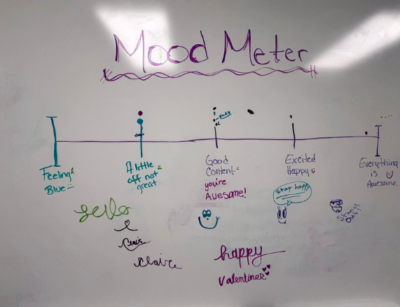
Over time, I saw students become more confident in expressing emotions, asking for support, resolving conflict differently, and encouraging one another within their peer relationships. Some of the biggest moments were not necessarily the loud or obvious ones, but the quieter moments, a student opening up for the first time, a child beginning to believe in their own strengths, or watching peers show kindness and support toward one another without prompting.
One thing that became very clear to me this year is how deeply connected emotional wellbeing and learning truly are. When students feel safe, supported, and understood, it impacts every part of their school experience. Having access to counseling support within the school setting helps students build skills that extend far beyond the classroom. These are skills they will carry into friendships, family relationships, future workplaces, and adulthood.
I also appreciated how relational the work at Potter’s House is. Students were not viewed as “problems to solve,” but as individuals with unique stories, strengths, personalities, and needs. Whether it was sitting with a student during a difficult day, helping a group navigate conflict, or simply sharing laughter during lunch groups, the relational aspect of the work was what made the greatest impact.
One of the things I appreciated most about Potter’s House was the sense of community within the school. Teachers, staff, administration, and support services all work together with genuine care for the students. It created an environment where emotional wellbeing was valued alongside academics, which I believe makes a lasting difference for children. I always felt supported not only as an intern, but also as a developing clinician learning how to navigate school-based mental health work.
This experience strengthened my understanding of how impactful accessible mental health support can be for children and families. Schools are often one of the first places were emotional struggles become visible, and having counseling services integrated into environment helps reduce barriers and increases opportunities for early support and intervention.
As my internship comes to an end, I feel incredibly grateful for the relationships built throughout this year. The students taught me just as much as I could have ever taught them, about resilience, honesty, humor, connection, and the importance of showing up consistently for others. I will carry this experience with me throughout my counseling career, and I am thankful to both Fountain Hill Center and Potter’s House for allowing me to be part of such meaningful work.
Emily Kuyers, Intern
